









Live. Laugh. Smile.
Methods to Correct Bites
Extractions for Orthodontic Purposes
Teeth are an important part of our health and well being. At Hometown Orthodontics, it is our goal to preserve as many teeth as possible. However, there are conditions or malocclusions where tooth removal or extractions for orthodontic purposes cannot be avoided. These include patients with severe crowding and patients with significant proclination (forward inclination) of the upper or lower teeth that it compromises smile esthetics or the patient has difficulty closing their lips around their mouth. The recommended amount of teeth to be extracted for orthodontic purposes vary from 1 to 4 teeth. The orthodontist determines which and how many teeth need to be extracted to help create enough space in the mouth to ideally align the teeth and/or correct any bite issues. Patients with extreme crowding that cannot be resolved with other approaches such as expansion or interproximal reduction, would benefit from extractions as it gives patients a better long-term bite and often improves their facial profile.
Which teeth are usually removed?
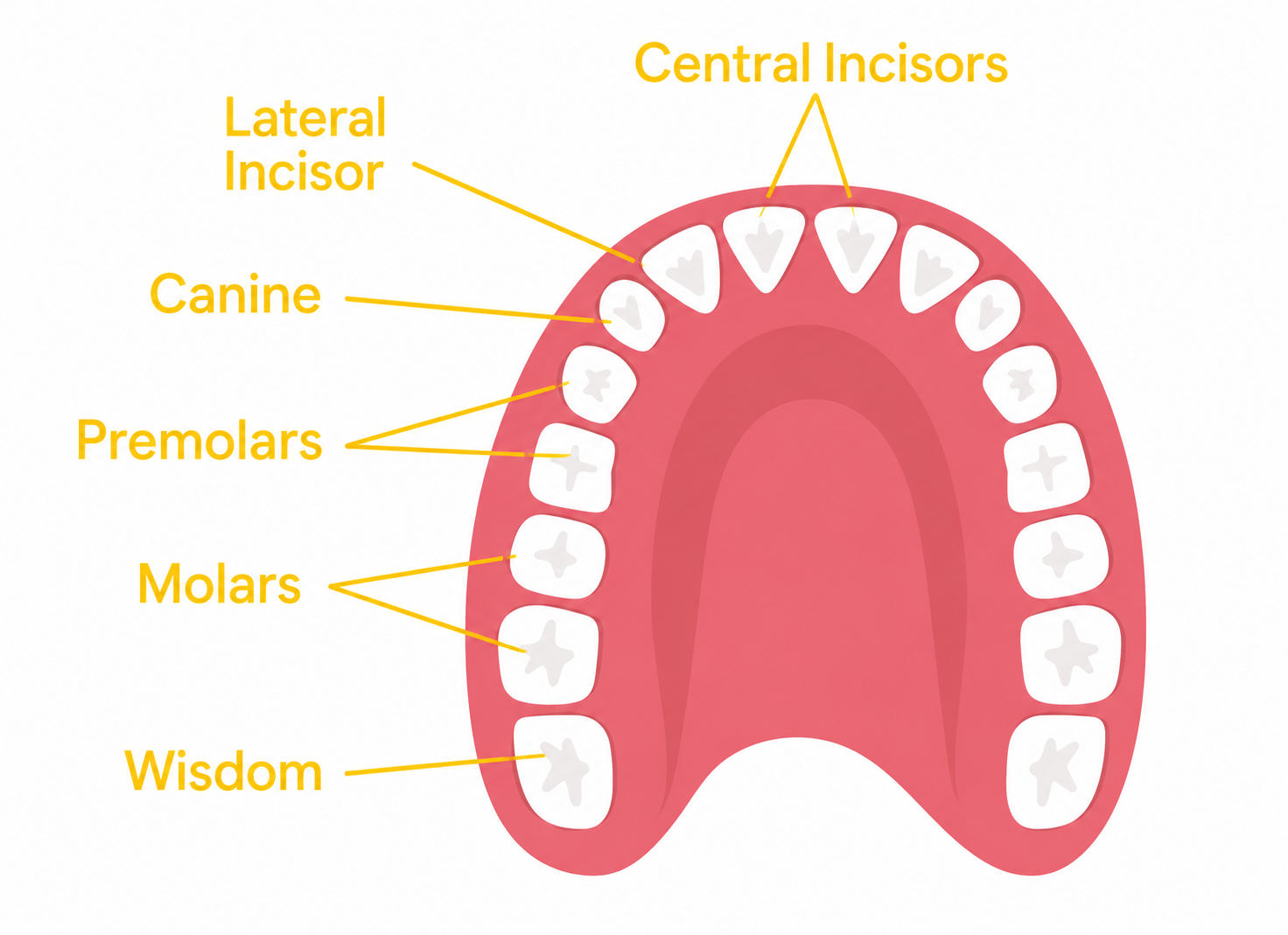
Extraction of teeth are determined on a case by case basis, but usually the teeth most frequently removed are the premolars. Premolars come in pairs so when we remove one, you are still left with its twin! Other teeth can be removed but this usually depends on the specific space needed or the treatment objectives for the patient.
Is it safe to remove my teeth? Does it hurt?
Tooth removal or extractions are completed by your dentist or an oral surgeon. The teeth are first anesthetized prior to removal. This is pretty quick procedure with short-lived discomfort. The benefits of extractions with an oral surgeon is that the patient can be partially sedated during the extraction procedure (similar to wisdom tooth extraction). As a result, the patient does not remember the procedure or the discomfort associated with extractions. This is a great option for patients who may be nervous about dental treatment.
When will extraction of teeth be completed for orthodontic purposes?
Dr. Virdee usually recommends extraction of teeth within the first 2-4 months after braces are bonded. There are several reasons for this.
1) We want to be sure that extractions are the right option for the patient. Initial alignment of teeth allows the patient to visualize what their smile and teeth would look like if they didn't extract any adult teeth. This is a test to see if the patient is comfortable with removal of teeth. It also allows Dr. Virdee to confirm her treatment plan of which teeth and how many to remove.
2) Removal of teeth after initial alignment will allow the orthodontist to take advantage of the Regional Acceleratory Phenomenon which accelerates space closure.
When teeth are removed, the body increases blood flow to that region to help with healing, resulting in an increase in biological modulators to the extraction site. If space closure is started right after extractions are completed, the increase in blood flow and cellular modulators results in faster space closure, which means the patient is in treatment for less time! Space closure of extractions spaces by orthodontic movement of teeth takes approximately 6 months (1mm/month). If teeth are extracted before orthodontic treatment starts, the bone has a chance to heal before wires are placed to help close space. This means space closure is slower.
What if I choose not to pursue extractions?
There are several reasons patients try to avoid extractions. Some don't want to remove teeth due to fear of extractions, others feel that they want to keep the exact number of teeth that they were born with, others believe in an old wives tale that extraction of teeth may lead to poor eye sight, which of course is not true! Extraction of teeth has no affect on biting force or function and chewing1,2. In the late 80s and 90s there were some reports in the media that extraction of premolars lead to temporomandibular joint disorders (TMD). Research has shown there is no correlation between extraction of permanent teeth and TMD1,2. As with TMDs, a talking point that has recently started trending on social media is that extraction of teeth results in breathing difficulties or obstructive sleep apnea. These allegations are not supported by current literature and should be viewed with caution.
At Hometown Orthodontics, our philosophy is always to try to avoid taking out teeth if we can help it. This is why Dr. Virdee will always align the teeth for the patient first prior to extraction of teeth. In this way the patient can "take their smile out for a test drive." A lot of times, patients are happy with their smile and extractions can be avoided.
Consequences of Non-Extraction
The greatest consequences of declining extraction of permanent teeth are related to smile esthetics and the health of the lower incisors.
Our goal as orthodontists is to achieve the best smile esthetics for our patients. This means that the patient has a full smile from one corner of the mouth to the other, there is 1-2mm of gingiva or gum show below the upper lip and the edges of the upper teeth follow the curve of the lower lip, creating a consonant smile arch.
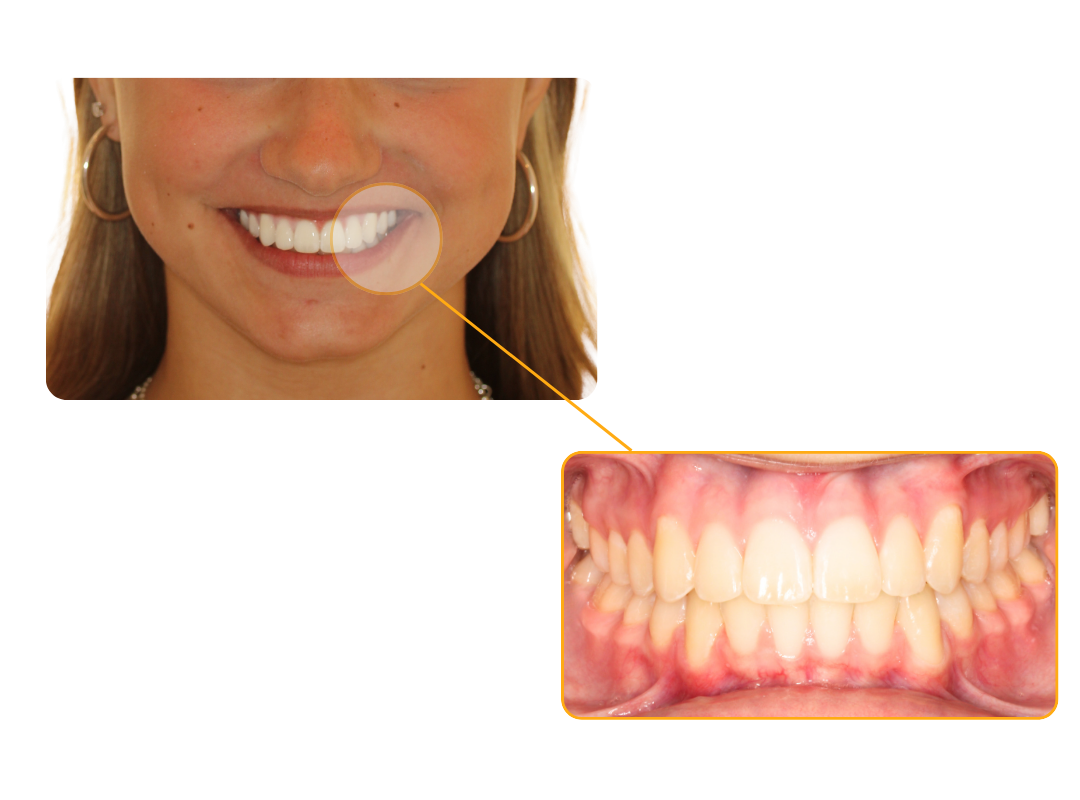
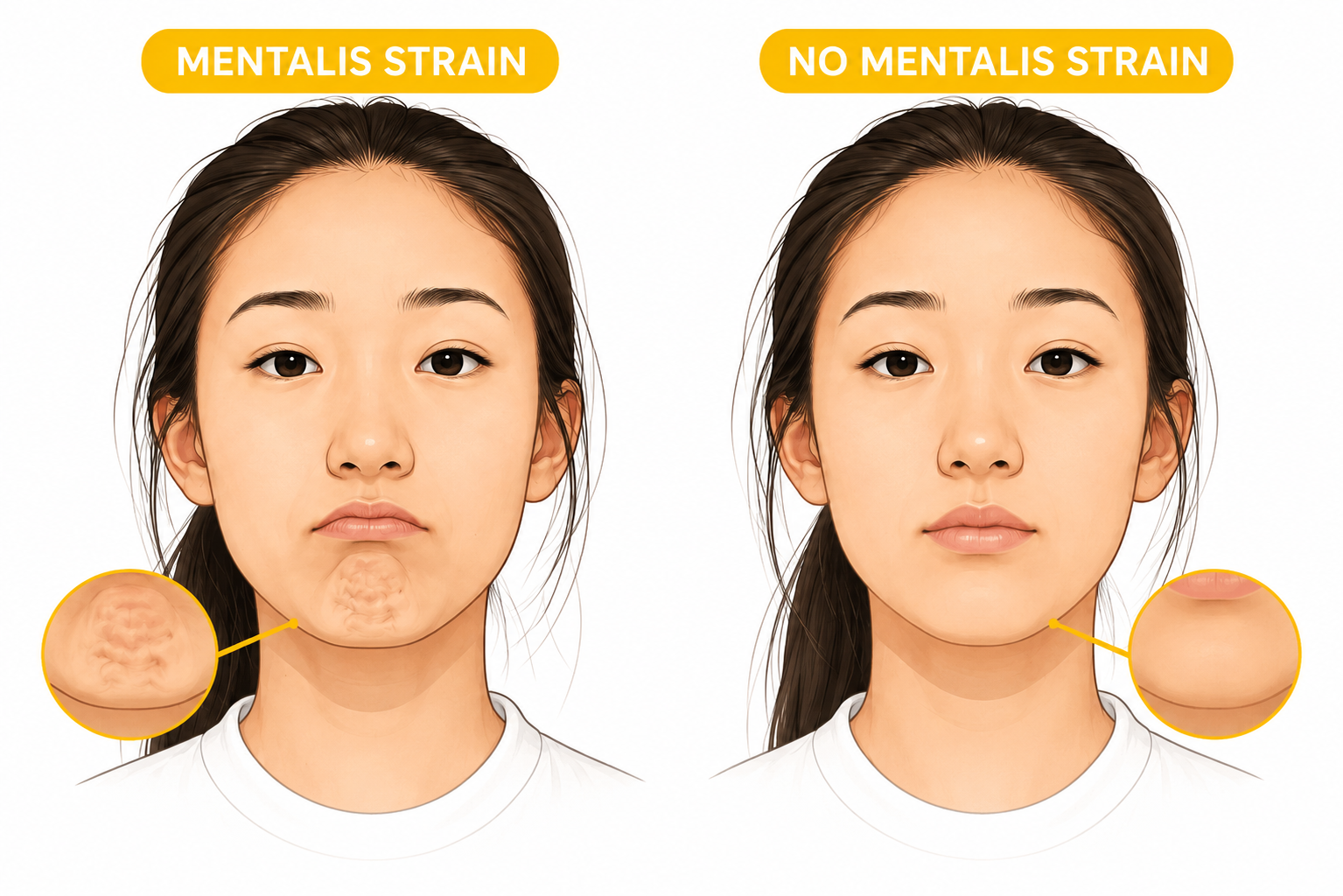
A patient with significant crowding that declines extractions will often show compromised smile esthetics. The upper front teeth will flare forward as space is created to make room for all the teeth to fit. As a result, when the patient smiles, the upper lip moves only enough to show the middle of the upper teeth with no gingiva showing and the teeth tend to "stick out". What's more, patients often have a difficult time closing their lips around the flared teeth, leading to stress at the chin or mentalis muscle.
Take a look at this case!
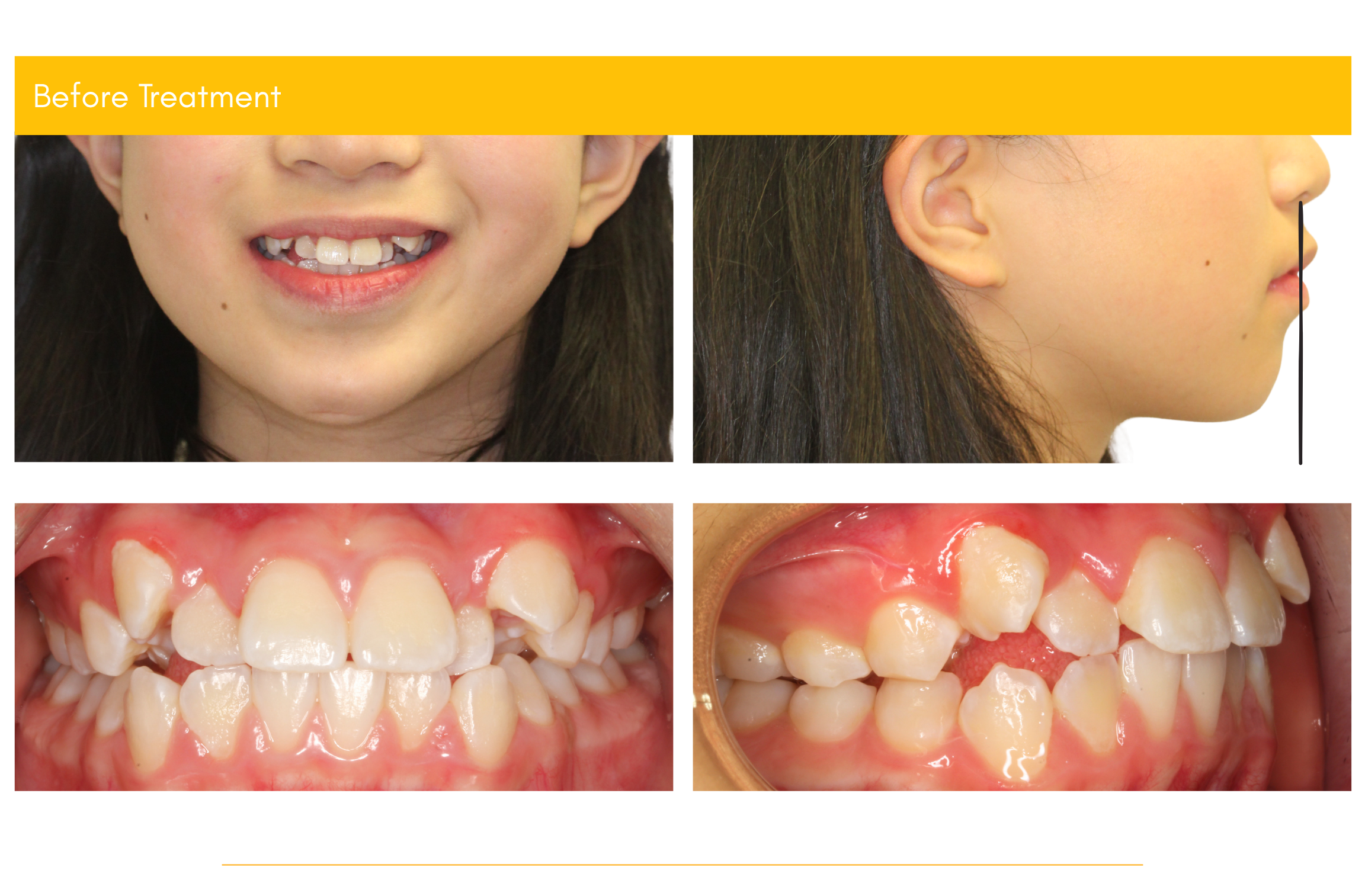
A patient presented to Dr. Virdee for crowded upper and lower teeth. Dr. Virdee advised for extractions as there was already significant flaring of the upper and lower front teeth. The patient had limited space for all the teeth to be aligned ideally. Despite Dr. Virdee's recommendations, the patient and her parents decided against the extractions.
This resulted in teeth that had a significant forward incline. The smile esthetics were compromised: the patient did not show the entire length of their upper front teeth let alone a thin amount of gingiva on smile, she had a difficultly closing her lips around her teeth resulting in strain at the chin muslces and her lips were significantly procumbent when closed.
Our recommendations are always based on achieving the best possible result for the patient. There is a fine balance between creating a beautiful smile, healthy function bite, and facial harmony. This case highlights why creating enough space via extraction of teeth is sometimes essential for both the appearance and function of your smile and associated structures.That's why we carefully discuss all treatment options so you can make an informed decision that is right for you

Health Benefits of Extractions
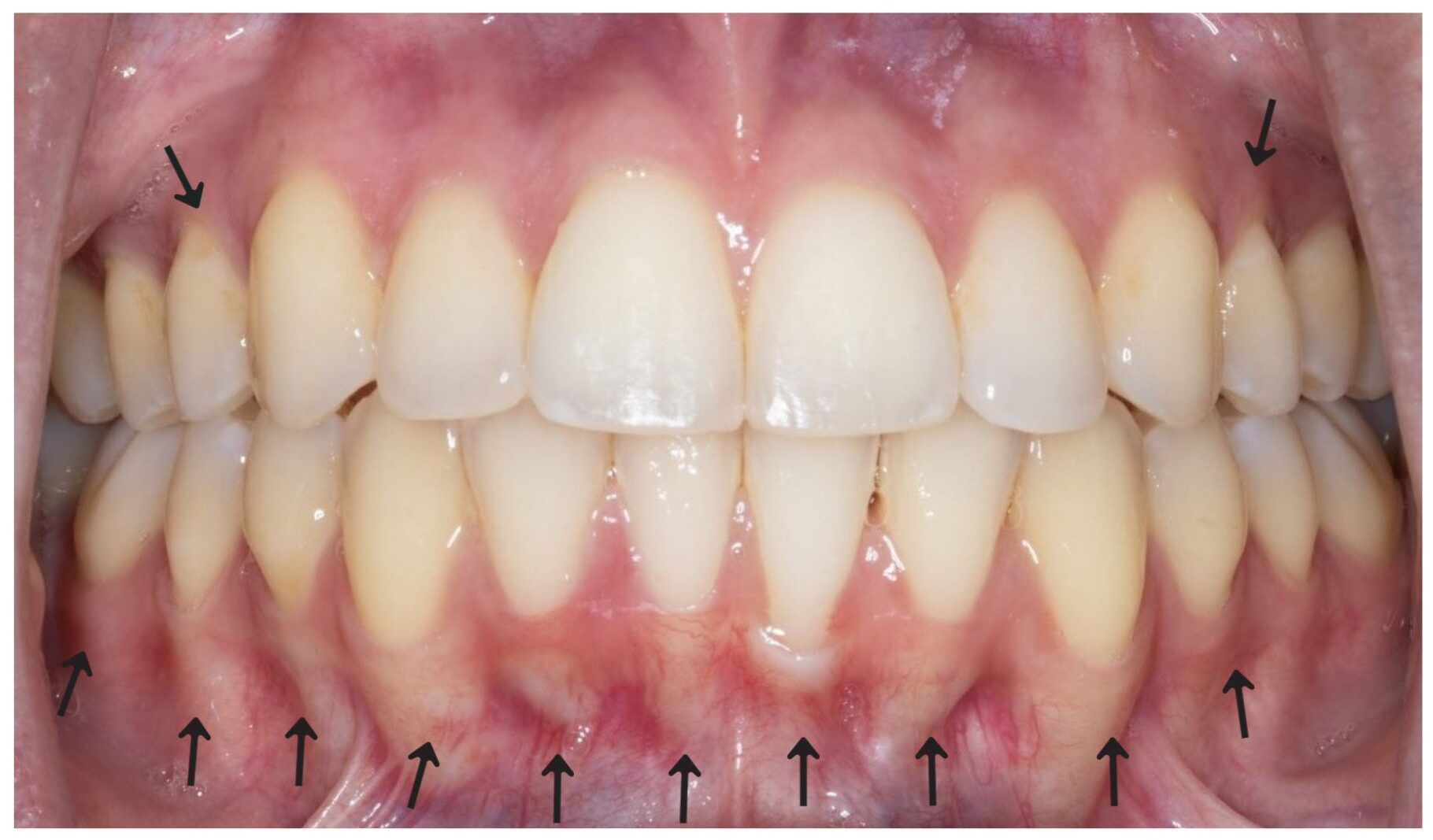
From a health standpoint, declining extraction of teeth can potentially be detrimental to the bone and gingiva around your teeth. The bone on the front and back (tongue side) of your teeth is finite. This means that it cannot be grown. Teeth usually sit within and in the centre of the jaw bone. The gingiva in turn is attached to the bone and a small collar of the gingiva rises up above the bone and over the teeth. This is called the free gingiva. When you go to the dentist and they measure or probe your gums, they are measuring the distance between the top border of the gingival margin and the margin of the bone underneath. As teeth move orthodontically, they move away from the center of the bone and towards the outer limit of the bone that they are housed in. If there is excessive crowding, alignment will require more space which means that the lower front teeth will move further towards the outer margins of the bone resulting in recession - which means the roots of the teeth start showing. In most cases, this will result in the need for a gum graft. In severe cases, because the bone no longer supports the teeth, it can result in tooth loss.
Extraction of teeth results in creation of space so there is less risk of moving teeth outside of their bony housing, which means there is less risk of recession and tooth loss.
Extraction Smile Gallery

Correcting a protrusive bite with premolar extraction
This patient was referred to our office by their general dentist and with concerns raised by the patient's parents. During Dr. Virdee's examination, she noted that there is excessive overjet (the horizontal space between the upper and lower teeth), and excessive crowding. The patient also exhibited difficulty closing their lips around the teeth which resulted in a noticeable strain at the chin, otherwise known as Mentalis strain. The patient was treated with braces and extraction of 4 pre molars which allowed the teeth to be brought back into proper alignment, correcting the overjet and crowding, and also relieving the mentalis strain to provide an aesthetically inclined facial profile and the ability to comfortably close her lips around her teeth.
Total treatment time: 24 months

Correcting a protrusive bite with premolar extraction
This patient came to us with concerns of her overbite and overall alignment of her teeth. Upon examination, Dr. Virdee noted that the patient has excessive crowding and overjet. The patient also had trouble closing her lips around her teeth, again causing Mentalis strain. The patient was treated with extractions in combination with braces. The progress photo shows that even before finishing braces, the patient already has better capabilities to close her lips around the teeth and the overjet is tremendously better!
Total treatment time: 24 months

Correcting a protrusive bite with premolar extraction
Another case showcasing the power of using extractions in combination with braces to give the ideal bite and profile. This patient came in with excessive crowding and overjet that caused her teeth to procline out. This resulted in Mentalis strain from not being able to close the mouth around the teeth. Extracting the 4 premolars and overall aligning the teeth and bite helped to correct all of the concerns. Her profile softened, her lips came together with ease and her smile was brighter than it had ever been!
Total treatment time: 24 months

Correcting a protrusive bite with premolar extraction
This patient's dentist noticed some concerns that can only be fixed with orthodontic treatment. The patient exhibited a deep bite, excessive overjet, and crowding. The patient was recommended to have extractions of two premolars in combination with braces to bring back the proclination of the upper incisors. The decision was not easy at first but it paid off for the patient as by the end, he was able to have his teeth move into alignment, the profile became more balanced, and he left our office with a bright smile!
Coincidentally, his sister had the very same treatment plan, and her results turned out almost identical!
Total treatment time: 24 months
Correcting a protrusive bite with premolar extraction
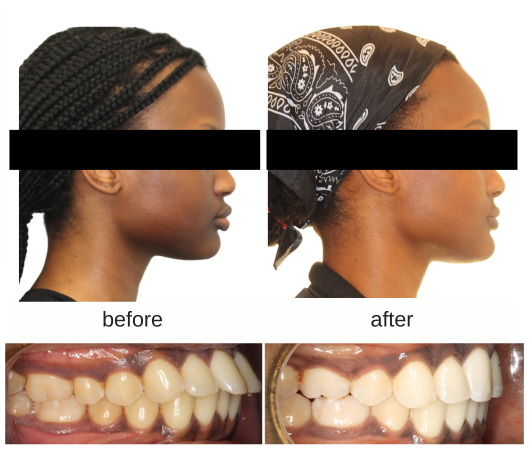
This wasn't the patient's first time in braces. The patient had her first round of braces several years ago in hopes of avoiding teeth. Although, by the end of her treatment, she realized she would have benefited immensely from them. When she came to see Dr. Virdee for a consultation, she was determined to get it right this time. After going through her exam, Dr. Virdee confirmed the patient's thoughts that she would and will benefit from extractions due to not having enough space to place her teeth in the ideal position. With Dr. Virdee's ultimate recommendation, the patient agreed to have extractions of 4 teeth in combination with braces. By the end of teethment, she was able to walk away with a confident smile that she always wanted (and also no Mentalis strain!).
Total treatment time: 24 months
References:
1. Larsen AJ, Rindal DB, Hatch JP, Kane S, Asche SE, Carvalho C, et al. Evidence Supports No Relationship between Obstructive Sleep Apnea and Premolar Extraction: An Electronic Health Records Review. J Clin Sleep Med. 2015;11(12):1443-8.
2. Papageorgiou SN, Zyli M, Papadopoulou AK. Extraction of premolars in orthodontic treatment does not negatively affect upper airway volume and minimum cross-sectional area: a systematic review with meta-analysis. Eur J Orthod. 2025;47(2).